Zombie Cells : How Cellular Senescence and Inflammaging Accelerate Aging
Longevity Science
8 min
Nature Medicine · Annual Review of Physiology · Cell · PubMed
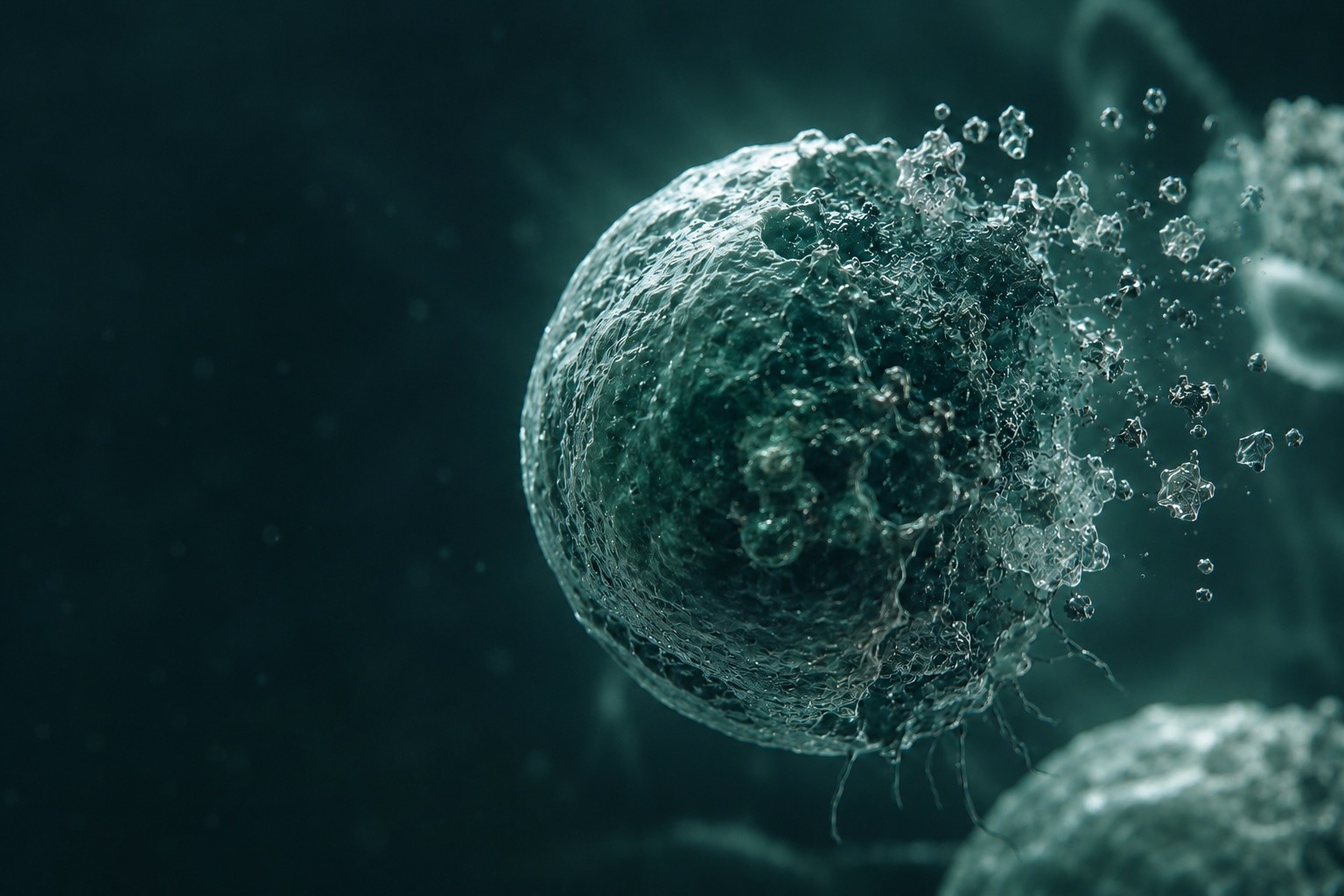
There exist in your body cells that have stopped functioning normally. They no longer divide. They no longer fulfill their tissue role. But they do not die either. They persist indefinitely, secreting a cocktail of inflammatory molecules that disrupt the healthy cells surrounding them.
Scientists call them senescent cells. In scientific communication, they have been nicknamed "zombie cells". And although this term is informal, it captures something essential: these cells are neither truly alive in the functional sense, nor eliminated. They occupy space, consume resources, and progressively poison their environment.
Cellular senescence and the chronic low-grade inflammation it generates — inflammaging — are among the most actively studied aging mechanisms in geroscience today.
What is cellular senescence?
DNA damage constitutes the most classic trigger. When a cell accumulates irreparable genomic lesions — double-strand breaks, critically short telomeres, chromosomal instability — specific signaling pathways (p53/p21, p16/Rb) activate a permanent cell cycle arrest. This is a protective response: rather than dividing with damaged DNA and risking transmitting oncogenic mutations, the cell "chooses" to stop.
Chronic oxidative stress, notably that generated by dysfunctional mitochondria, can also induce senescence via the accumulation of oxidative damage to DNA and membranes.
Oncogenic activation paradoxically also triggers senescence as a tumor suppression mechanism: a cell whose oncogene is activated enters senescence to avoid malignant transformation.
SASP from neighboring cells can propagate senescence in a paracrine manner — partly explaining the contagious nature of tissue aging.
The SASP: when senescent cells become toxic
The most important characteristic of senescent cells is not their proliferative arrest — it is their active secretion.
Senescent cells develop a secretory phenotype formalized under the name SASP (Senescence-Associated Secretory Phenotype), described by Judith Campisi from the early 2000s. The SASP is a complex cocktail of pro-inflammatory molecules: interleukins (IL-6, IL-8, IL-1β), growth factors (HGF, EGF), matrix proteases (MMP-3, MMP-9) and chemokines.
In small quantities and transiently, the SASP fulfills useful functions. It recruits immune system cells via a process called immune surveillance. It participates in tissue wound healing.
The problem arises with age. As senescent cells accumulate and immune surveillance loses efficiency, the SASP becomes chronic and systemic. It degrades the extracellular matrix, disrupts stem cell function, induces senescence in neighboring healthy cells, and fuels inflammaging at the systemic level.
Inflammaging: the chronic inflammation that ages the organism
The term inflammaging was introduced by Claudio Franceschi in 2000. It designates the state of chronic low-grade, sterile inflammation that progressively sets in with age.
Inflammaging is chronic, low-grade, sterile and systemic. Its sources are multiple:
Dysfunctional mitochondria release mitochondrial DNA fragments into the cytoplasm, activating innate immune receptors (cGAS-STING) and triggering an inflammatory response.
Intestinal dysbiosis increases intestinal barrier permeability, allowing systemic passage of bacterial fragments (LPS) that chronically activate the innate immune system.
CD38 and NAD+ decline form a well-documented inflammatory loop: pro-inflammatory cytokines activate CD38, which massively degrades NAD+. The drop in NAD+ reduces the activity of anti-inflammatory sirtuins. Which worsens inflammation, activates more CD38, reduces NAD+ further. A biochemical vicious cycle with systemic consequences.
Biomarkers of inflammaging
Interleukin-6 (IL-6) is the most widely used marker. Its levels increase exponentially after age 60. Elevated levels are associated with increased risk of cardiovascular disease, cognitive decline, sarcopenia and all-cause mortality.
C-reactive protein (CRP) is produced by the liver in response to interleukins. Its ultra-sensitive form (hsCRP) is used in longevity studies as an indicator of inflammaging level.
TNF-α (tumor necrosis factor alpha) contributes to insulin resistance, sarcopenia and immunosenescence.
Furman et al. (Nature Medicine, 2019) showed that these markers allow identification of two subgroups among older individuals: those whose inflammation remains low despite chronological age — associated with better functional longevity — and those with high inflammation — associated with accelerated decline.
Senolytics and senomorphics: ongoing clinical research
Senolytics are molecules capable of selectively eliminating senescent cells. Early generations (dasatinib, quercetin, navitoclax) showed remarkable effects in mouse models: lifespan extension, improvement in physical and cognitive functions. Human clinical trials are ongoing.
Senomorphics or senostatics do not seek to eliminate senescent cells but to suppress their SASP. Certain natural actives including quercetin, resveratrol and NF-κB inhibitors are being studied in this context.
Why this mechanism is central to cellular longevity
Cellular senescence constitutes a paradigmatic example of an antagonistic mechanism according to the Hallmarks of Aging: initially protective, it becomes deleterious when it accumulates chronically with age.
Virtually all age-related chronic diseases — cardiovascular disease, type 2 diabetes, neurodegenerative diseases, cancers — emerge in a context of chronic inflammaging. Inflammation is not the consequence of these diseases. It is their breeding ground.
In conclusion
Zombie cells are not a metaphor. They are a measurable biological reality, whose progressive accumulation constitutes one of the most important mechanisms of systemic aging.
Understanding cellular senescence and inflammaging means understanding why aging is not simply the mechanical wear of an organism — it is an active biological dynamic, in which certain cells progressively disrupt the functioning of the whole.
References: Campisi, Annual Review of Physiology, 2013 · Furman et al., Nature Medicine, 2019 · Franceschi et al., Science, 2000 · López-Otín et al., Cell, 2023 · Baker et al., Nature, 2011
This article is published for informational and educational purposes only. It does not constitute medical advice and does not replace professional medical consultation.
In your body there are cells that have stopped functioning but refuse to die. As they accumulate with age, these zombie cells secrete a pro-inflammatory cocktail that progressively poisons surrounding tissues. One of the most actively studied aging mechanisms in geroscience today.
Discover cellular senescence and inflammaging: how zombie cells, SASP and chronic low-grade inflammation accelerate biological aging according to Judith Campisi and contemporary geroscience.