The Blue Zones : What the World's Longest-Lived Populations Teach Us About the Biology of Aging
Longevity Science
11 min
PNAS · National Geographic · Experimental Gerontology · Nature · Cell · PubMed
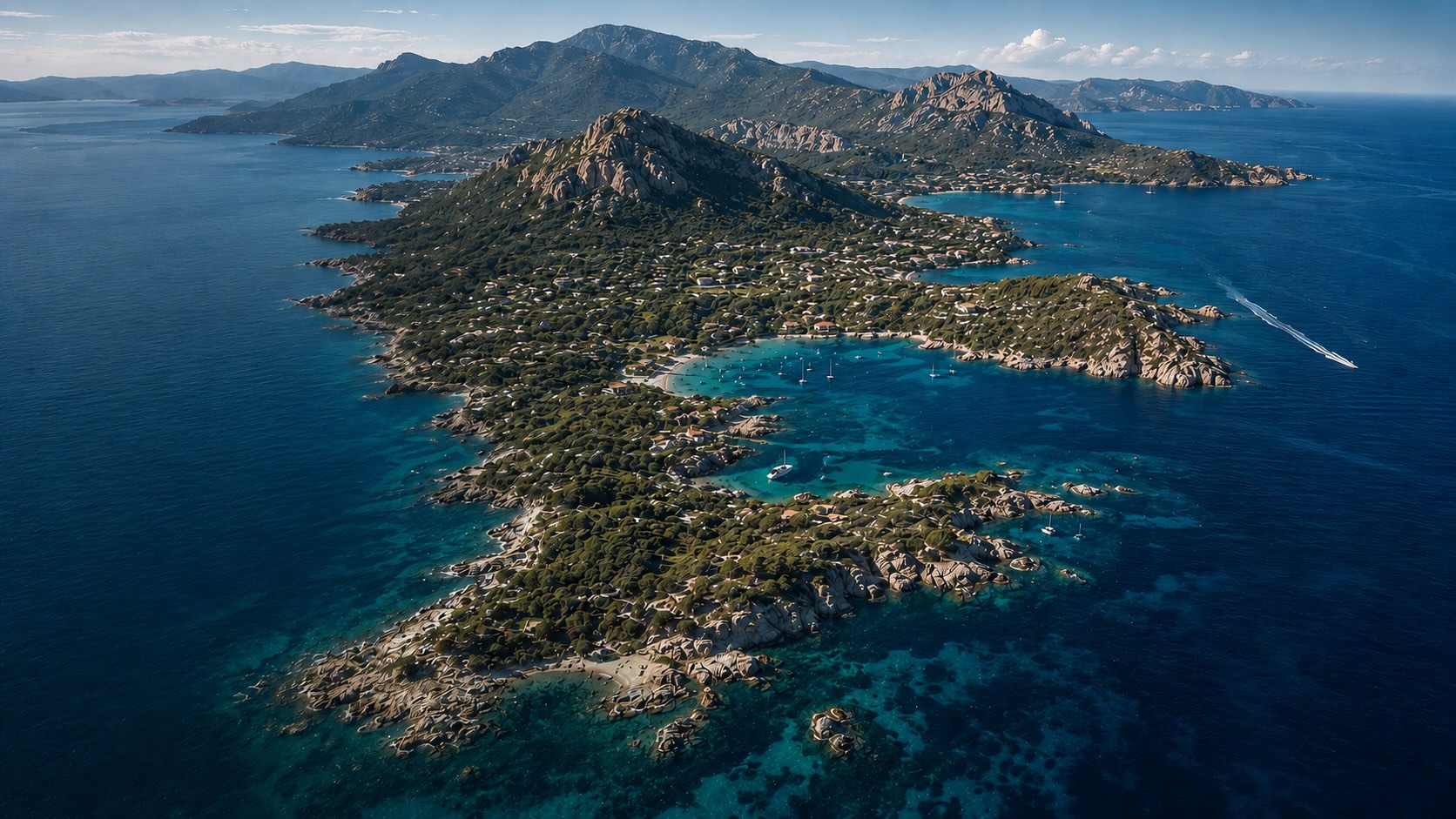
In 2000, Belgian demographer Michel Poulain and Italian physician Gianni Pes began mapping a statistical anomaly in Sardinia. In a cluster of villages in the Barbagia region, the concentration of male centenarians was unmatched anywhere else in the world. To mark the relevant municipalities on their map, they used a blue pen. The term Blue Zone was born.
A few years later, journalist Dan Buettner — working with National Geographic — extended the research to other parts of the world. Five zones were ultimately identified and validated through rigorous demographic analysis.
These five regions amount to large-scale natural experiments in longevity: human populations that have, without modern medical intervention, solved part of the biological aging problem in a reproducible and documented way.
The five Blue Zones
Sardinia — Barbagia, Italy
Sardinia has the highest documented concentration of male centenarians in the world. Unlike the global pattern in which women account for 80 to 90% of centenarians, the male-to-female ratio in Sardinia runs close to 1:1 — a demographic outlier that has drawn the attention of geneticists. Genomic studies have identified specific variants in genes governing oxidative stress response and inflammatory regulation.
Okinawa — Japan
The Okinawa archipelago long held the world record for female longevity. The Okinawa Centenarian Study, running since 1975, has built one of the richest databases on the biology of human longevity. Okinawan centenarians show a striking biological profile: low rates of chronic inflammation, reduced oxidation biomarkers, and consistently favourable lipid panels.
Worth noting: the generation born after World War II, raised on a diet shaped by American influence, has a significantly lower life expectancy than its elders — a natural demonstration of how heavily environmental factors weigh on biological longevity.
Loma Linda — California, United States
Loma Linda is made up predominantly of Seventh-day Adventists. The Adventist Health Study — which followed more than 96,000 participants — found that Adventists live on average 7 to 10 years longer than the Californian mean. It is the only Blue Zone located in an industrialised Western country.
Nicoya — Costa Rica
Research on this population found significantly longer telomeres in Nicoya centenarians. The plan de vida — a deeply held sense of purpose and reason for being — was identified as one of the defining psychobiological factors behind the region's longevity outcomes.
Ikaria — Greece
The Greek island of Ikaria has a rate of people reaching 90 that runs roughly three times the European average, alongside some of the lowest rates of dementia and depression on the continent. Its residents have been described by researchers, with some affection, as having "forgotten to die."
Biological convergences: what the five zones share
A predominantly plant-based diet, low in refined sugars
Across all five Blue Zones, the diet is built around legumes, vegetables, whole grains, fruits, and nuts. The shared biological profile is consistent: high fibre content (a primary substrate for microbiome diversity), high polyphenol density (which modulates the sirtuins/mTOR pathway), and a low glycaemic index (which keeps IGF-1 and insulin signalling in check).
In Okinawa, the cultural practice of hara hachi bu — stopping at roughly 80% full — amounts to a lifelong form of gentle caloric restriction, with documented downstream effects on mTOR and AMPK signalling.
Moderate, daily physical activity woven into ordinary life
What these populations share is not a fitness regimen. It is regular, moderate movement embedded in the rhythms of daily life — walking, gardening, tending livestock, climbing hills. The intensity maps almost precisely onto what Peter Attia calls Zone 2: the aerobic range that optimises mitochondrial biogenesis, fat oxidation, and insulin sensitivity.
At the cellular level, this sustained activity keeps skeletal muscle NAD+ levels elevated, activates mitochondrial sirtuins SIRT1 and SIRT3, and maintains autophagic flux — the cell's quality-control system for clearing damaged components.
Low chronic stress and structured ways of unwinding
Blue Zone populations have built stress-relief practices directly into their daily and weekly routines: afternoon napping in Sardinia and Ikaria, daily prayer among Loma Linda Adventists, the moai — a lifelong social support circle — in Okinawa, and Sabbath rest among Adventists.
Studies have linked high levels of social cohesion to longer telomeres and lower circulating IL-6 — two of the most established biological markers of aging pace.
A strong sense of purpose and belonging
In Okinawa, ikigai — reason for being — is a central cultural concept. In Nicoya, the plan de vida structures daily life around a clear sense of direction and meaning.
High levels of purpose and social belonging are associated with lower baseline cortisol, better sleep quality, and reduced inflammatory markers — effects that operate through identified neuroendocrine and immune pathways, not simply through mood.
The genetics of Blue Zones: how much do they matter?
Twin studies consistently estimate the genetic contribution to extreme longevity at around 20 to 30%, leaving 70 to 80% attributable to environmental and behavioural factors.
The Okinawan migration data makes this concrete. Okinawans who moved to the United States and adopted a Western diet and lifestyle show a life expectancy close to their American peers — not to their relatives back home. The genes remained the same. The outcomes diverged entirely.
That figure has a significant implication: the large majority of biological longevity determinants are, in principle, modifiable.
What Blue Zones don't teach us
An analysis by Saul Newman published in 2023 raised questions about the reliability of civil registration records in some of the regions studied. The work is a useful reminder of the rigour required when interpreting population-level longevity data, and the field has taken it seriously.
More broadly, Blue Zones are integrated biological and social systems. The documented biological outcomes emerge from the coherence and persistence of all contributing factors across an entire lifetime — not from any single behaviour adopted in midlife. This is both the most important and the most underappreciated finding in the literature.
A natural experiment geroscience is still decoding
Blue Zones are population-level evidence that the core mechanisms of biological aging — inflammaging, mitochondrial dysfunction, telomere shortening, epigenetic dysregulation — are decisively shaped by environmental, nutritional, and psychosocial context.
What geroscience works to understand in the laboratory, these populations have been living out for generations, with no awareness of the molecular mechanisms at work.
That is, in its own way, one of the most compelling findings in longevity research.
References: Poulain et al., Experimental Gerontology (2004) · Willcox et al., PNAS (2008) · Fraser & Shavlik, Archives of Internal Medicine (2001) · López-Otín et al., Cell (2023) · Blackburn & Epel, The Telomere Effect (2017)
This article is published for informational and educational purposes only. It does not constitute medical advice and is not a substitute for professional healthcare consultation
In 2000, a Belgian demographer marked in blue on a map the Sardinian villages where the concentration of centenarians is unmatched worldwide. The term Blue Zone was born. Five regions of the world are today identified as natural laboratories of exceptional human longevity.
The 5 Blue Zones — Sardinia, Okinawa, Loma Linda, Nicoya, Ikaria — and their biological convergences: plant-based diet, moderate physical activity, low stress, ikigai, hara hachi bu. What geroscience retains from these centenarian populations.